|
|
|
[Tennessee | | | | ]
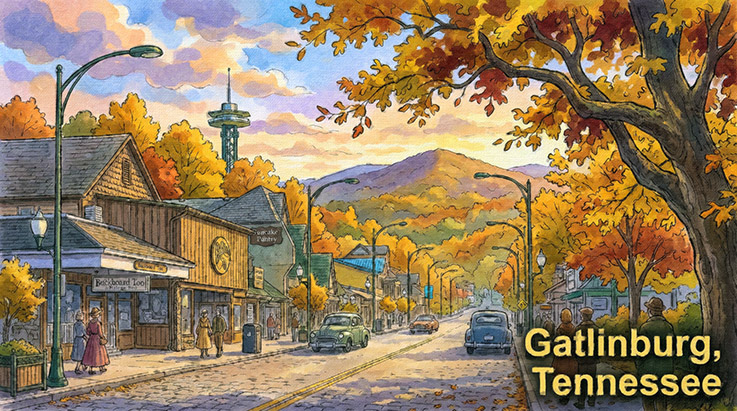
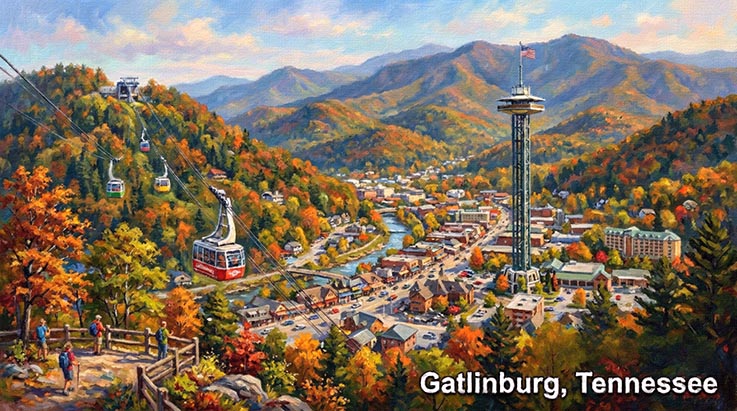 Gatlinburg is one of the best-known mountain gateway towns in the United States—a lively, heavily visited Smokies hub
where national park adventure and full-on vacation energy meet in the same place. It’s much busier and more commercial
than Townsend, but that’s also part of its appeal: if you want easy access to the Great Smoky Mountains plus a huge
selection of restaurants, attractions, shops, and lodging, Gatlinburg delivers all of it in one compact mountain valley. Gatlinburg is one of the best-known mountain gateway towns in the United States—a lively, heavily visited Smokies hub
where national park adventure and full-on vacation energy meet in the same place. It’s much busier and more commercial
than Townsend, but that’s also part of its appeal: if you want easy access to the Great Smoky Mountains plus a huge
selection of restaurants, attractions, shops, and lodging, Gatlinburg delivers all of it in one compact mountain valley.
Natural Setting
Gatlinburg sits right at the edge of Great Smoky Mountains National Park, which the National Park Service
describes as America’s most visited national park. The park’s immense popularity is reflected in visitation
totals that reached more than 13 million visits in 2023, and Gatlinburg is one of the town gateways most
closely tied to that traffic and visitor experience. The setting is classic Southern Appalachian mountain country:
forested ridges, river corridors, misty mornings, scenic drives, and some of the best easy-access mountain scenery in
the eastern United States.
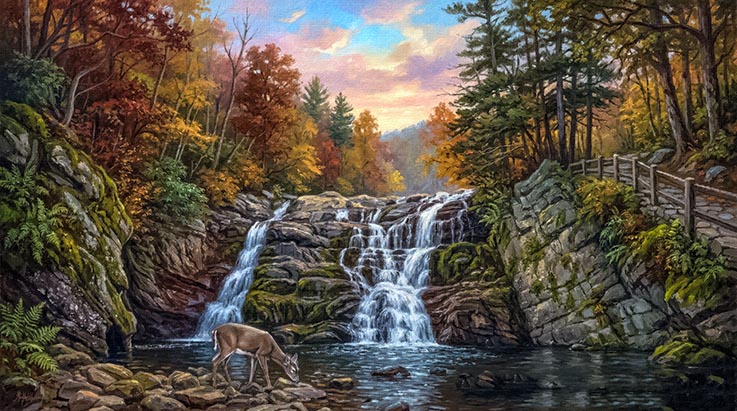 For recreation, Gatlinburg gives travelers immediate access to hiking, wildlife viewing, scenic drives, waterfalls,
photography, and mountain overlooks inside the national park. Outside the park itself, the town also offers additional
scenic viewpoints and mountain attractions, which is part of why it works so well for families and mixed-interest groups:
some people can head into the park at sunrise, while others can enjoy mountain views, walking areas, and attractions
closer to town. Gatlinburg can get extremely busy, especially in summer and peak foliage periods, but for many visitors
that tradeoff is worth it because of how much there is to do in one place. For recreation, Gatlinburg gives travelers immediate access to hiking, wildlife viewing, scenic drives, waterfalls,
photography, and mountain overlooks inside the national park. Outside the park itself, the town also offers additional
scenic viewpoints and mountain attractions, which is part of why it works so well for families and mixed-interest groups:
some people can head into the park at sunrise, while others can enjoy mountain views, walking areas, and attractions
closer to town. Gatlinburg can get extremely busy, especially in summer and peak foliage periods, but for many visitors
that tradeoff is worth it because of how much there is to do in one place.
Historical, Economic & Cultural Importance
Gatlinburg’s modern identity is built around tourism, and it is one of the most important visitor-service towns in the
entire Smokies region. The growth of the national park helped transform it into a major mountain resort and travel hub,
with an economy centered on hospitality, attractions, restaurants, outfitting, and family entertainment. Historically,
it also sits within the broader story of Southern Appalachian culture, which remains part of the region’s appeal even as
the town itself has become highly developed for visitors.
What makes Gatlinburg especially useful for travelers is its range: you can build an entire trip around the town and
park without ever running out of options. There are plenty of restaurants, coffee stops, sweets shops, and souvenir
stores, along with mountain-view attractions and enough lodging choices to support both quick getaways and longer stays.
In short, Gatlinburg is not the quietest Smokies town—but it may be the most complete. For visitors who want a true
gateway with lots to do before and after their park time, it earns its place on the list.
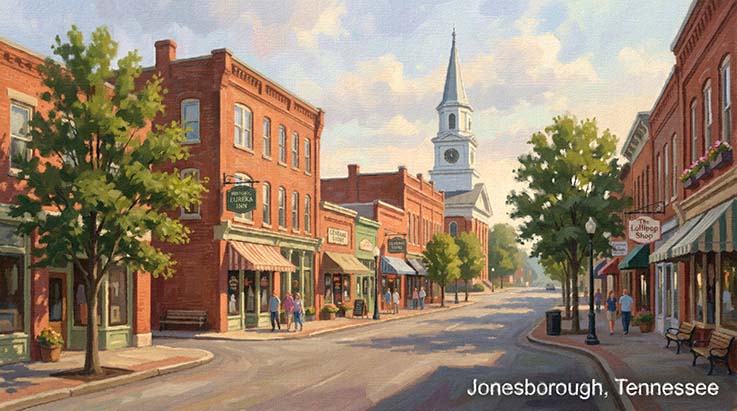
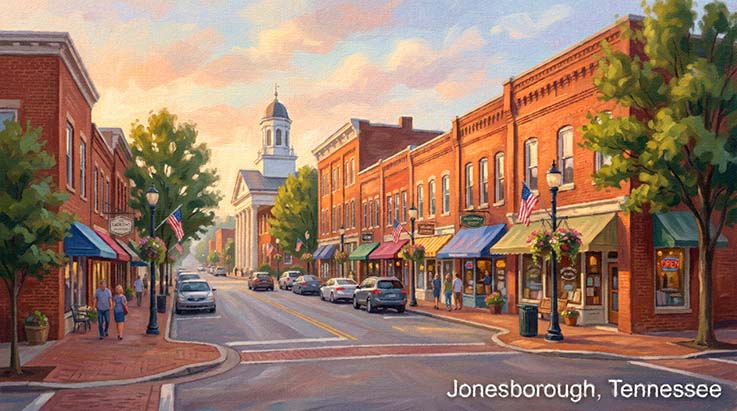 Jonesborough is Tennessee’s oldest town and one of its most charming—brick sidewalks, historic storefronts, and a downtown that’s made for slow strolling, browsing, and café stops. It’s special because it offers real heritage and a lively small-town center while sitting close to beautiful Appalachian scenery. Jonesborough is Tennessee’s oldest town and one of its most charming—brick sidewalks, historic storefronts, and a downtown that’s made for slow strolling, browsing, and café stops. It’s special because it offers real heritage and a lively small-town center while sitting close to beautiful Appalachian scenery.
Natural Setting
Jonesborough sits in the foothills of northeast Tennessee near the broader Appalachian mountain corridor. The landscape is rolling and green, with scenic drives and outdoor day trips easily within reach—especially toward nearby mountain parks, trails, and river recreation. Recreation options in the region include hiking, scenic drives, photography, cycling, fishing, and seasonal leaf-peeping, with plenty of opportunities to combine town time with short outdoor excursions.
Historical, Economic & Cultural Importance
Jonesborough’s historical significance is a big part of its appeal—well-preserved architecture, walkable historic districts, and a reputation for heritage events and storytelling culture. That legacy makes it a cultural anchor for the region.
Downtown is a delight: boutiques, antiques, bookstores, cafés, coffee shops, and strong local restaurants, plus cultural venues and seasonal festivals that keep the town lively. It’s a destination pick for travelers who love “old town America” with real atmosphere.
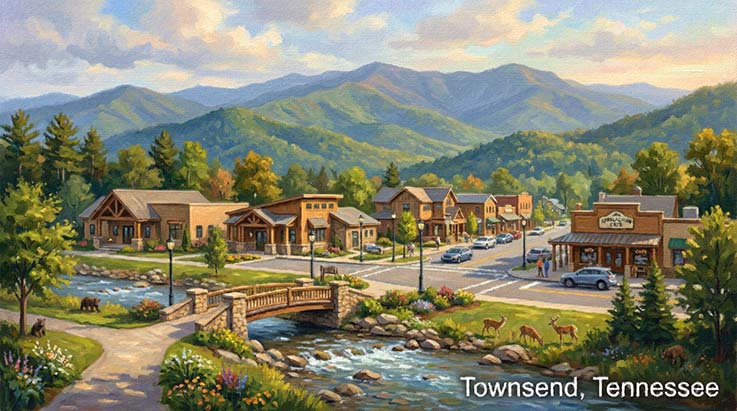
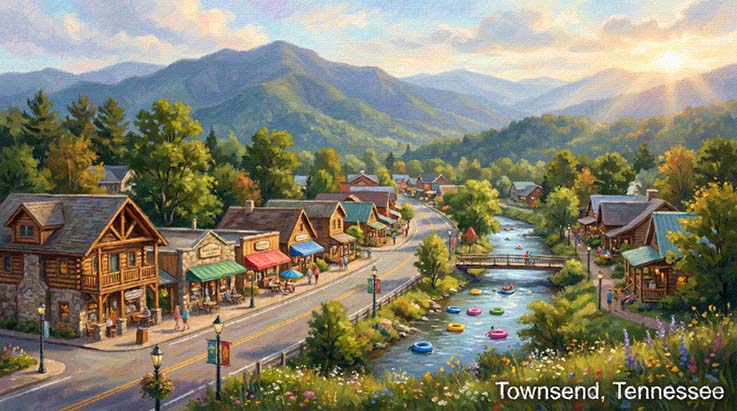 Townsend is the quieter, more relaxed gateway to the Great Smoky Mountains—small, scenic, and designed for travelers who want the park experience without the bustle. It’s special because it combines calm small-town lodging and dining with immediate access to one of America’s most visited national parks. Townsend is the quieter, more relaxed gateway to the Great Smoky Mountains—small, scenic, and designed for travelers who want the park experience without the bustle. It’s special because it combines calm small-town lodging and dining with immediate access to one of America’s most visited national parks.
Natural Setting
Townsend sits on the edge of Great Smoky Mountains National Park, with forested ridges rising nearby and river scenery threading through the valley. The setting is instantly peaceful—morning fog, mountain silhouettes, and a slower pace than bigger gateway corridors.
Recreation is world-class: hiking, scenic drives, wildlife viewing, fishing, photography, river walks, and seasonal water recreation, with easy access to major Smokies trailheads and viewpoints. Wildlife watching is a major highlight in this region—especially early and late in the day.
Historical, Economic & Cultural Importance
Townsend’s importance is primarily as a gateway community supporting Smokies tourism. It’s culturally valued because it offers a more “nature-first” experience—less strip development, more cabin-and-quiet-lodging feel.
Shopping is modest but traveler-friendly—outfitters and basics—while dining leans toward casual restaurants, breakfast spots, coffee stops, and family-friendly options. Townsend is perfect for travelers who want their Smokies trip to feel peaceful, not crowded.
Songs Associated with
The State of Tennessee






|
|

 Back to Best Small Towns in America