|
|
|
American Spotlight: Pirates of The Golden Isles
Why this coast bred legends
Between the late 1600s and early 1700s, the maze of barrier islands, sounds, and marsh-braid rivers from Florida's Amelia Island through coastal Georgia and into the South Carolina Lowcountry gave pirates and privateers exactly what they wanted: cover, current, and quick exits. Hidden cuts let small, shallow-draft vessels vanish on an outgoing tide; river bars and shoals punished deeper-keel pursuers; and lightly defended settlements:plus rival empires battling for the Southeast:created opportunity. The result is a coastline where documented raids, smuggling, and privateering blurred into the folklore of buried treasure that still clings to live-oak shade.
A fast timeline (the real greatest hits)
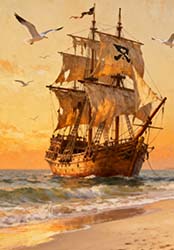
1600s: Missions, raids, and retreat. Spain's Franciscan missions dotted today's Georgia islands (Guale/Mocama). A wave of raids:by pirates and English-allied groups:culminated in 1684, when attacks left the last Georgia missions in ruins and the mission populations withdrew south. (New Georgia Encyclopedia)
-
"Blackbeard country." By the early 1700s, pirates working the Southeast coast:Edward Teach ("Blackbeard") among them:used meandering creeks and hammock hideouts. Blackbeard Island (northeast of Sapelo) bears his name on maps as early as 1760 and has nourished a persistent treasure legend (no confirmed finds). (New Georgia Encyclopedia)
-
1718: Blockade and hangings. Farther up the coast, Blackbeard and Stede Bonnet menaced trade; in May 1718 Charleston's port was blockaded, and by December Bonnet was tried and hanged in Charleston. The Lowcountry's Port Royal Sound/Hilton Head corridor features in multiple period accounts and later retellings of pirate activity. (South Carolina Historical Society)
-
1817: The "Republic of the Floridas" & Aury's flag. Amelia Island becomes a geopolitical circus: Scottish adventurer Gregor MacGregor seizes Fernandina, declares the "Republic of the Floridas," then departs; French privateer Luis (Louis-Michel) Aury arrives, claims the island for Mexico, and is ousted by U.S. forces in December 1817. (Today you'll still hear about Aury's buried loot:part history, part legend.) (Wikipedia)
Places where history and legend overlap

Amelia Island, FL : "Isle of Eight Flags." A true pirate/privateer hub with well-documented episodes: MacGregor's short-lived republic, Aury's occupation and privateering claims, and a long smuggling tradition tied to contested sovereignty. Start in Fernandina and the plaza site of Fort San Carlos. (Wikipedia)
-
Blackbeard Island, GA : Name on the map, legend in the dunes. Federally protected today, the island's 18th-century name links it to Blackbeard's era; treasure tales persist, but authorized hunts ended long ago without a doubloon. It's a superb place to talk about how myth accumulates around real maritime danger. (New Georgia Encyclopedia)
-
St. Simons & the mission coast. Spanish mission sites (San Buenaventura de Guadalquini; Santa Catalina de Guale on nearby islands) tell the pre-pirate backstory:and how persistent raiding helped erase that mission network by the mid-1680s. Walk the lighthouse area and museum exhibits to connect the dots. (National Park Service)
-
Port Royal Sound & Hilton Head, SC. The deep natural harbor drew trade:and trouble. Charleston's 1718 crisis and Lowcountry lore place Bonnet, Blackbeard, and other sea rogues along these sounds, with later British, Spanish, and French privateering during imperial wars continuing the pattern. (South Carolina Historical Society)
Did they really bury treasure here?
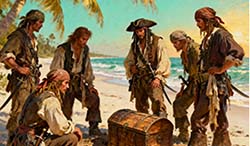 Short answer: the legends outnumber the ledgers. Blackbeard's supposed Georgia stashes make great stories, but there's no verified cache on record along these islands. Historians often point out that the only widely cited case of a pirate deliberately burying treasure for later retrieval is William Kidd (and even that tale is tangled with legal maneuvering and later mythmaking). Treasure narratives exploded in the 1800s thanks to novels and tourism pamphlets:but the stories endure because this coast looks like a place where secrets could stay hidden. (Wikipedia) Short answer: the legends outnumber the ledgers. Blackbeard's supposed Georgia stashes make great stories, but there's no verified cache on record along these islands. Historians often point out that the only widely cited case of a pirate deliberately burying treasure for later retrieval is William Kidd (and even that tale is tangled with legal maneuvering and later mythmaking). Treasure narratives exploded in the 1800s thanks to novels and tourism pamphlets:but the stories endure because this coast looks like a place where secrets could stay hidden. (Wikipedia)
How the coastline worked for pirates
-
Hydrography as strategy. Braided tidal rivers, shifting shoals, and inlets that re-draw themselves created a cat-and-mouse board where local pilots had the edge.
-
Shallow-draft advantage. Small sloops and periaguas could nip across sandbars into creeks that heavier naval craft dared not enter.
-
Empire vs. empire. Spain, Britain, and:later:new American authorities all vied for this rim of coast. Piracy, privateering, and smuggling often felt like politics by other means.
-
Human consequences. Mission communities and coastal tribes were displaced in the late 1600s; commerce with Charleston and Savannah ebbed and surged with raids and blockades; and the islands' population turned over as wars shifted. (New Georgia Encyclopedia)
Field Guide: a north–south ramble (music-friendly stops)
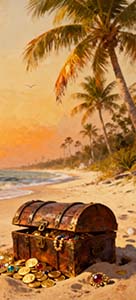
Hilton Head / Port Royal Sound, SC – Read up on Bonnet and Blackbeard's 1718 season, then listen for your own "oar-stroke" rhythm on the boardwalk. (South Carolina Historical Society)
-
Hunting Island & Beaufort – Lowcountry marsh vistas that match the lore; museum programming often covers pirates in Port Royal Sound. (South Carolina Lowcountry)
-
Savannah's Riverfront – Factors Walk, ballast stone, and bell tones:your lyric's opening tableau.
-
St. Simons & Jekyll – Missions, lighthouses, and story-dense dunes. (New Georgia Encyclopedia)
-
Blackbeard Island NWR – Wild and quiet; a perfect spot to talk myth vs. history. (U.S. Fish and Wildlife Service)
-
Amelia Island / Fernandina – From MacGregor's green cross to Aury's "republic," this is where the geopolitical farce turns very real. (Wikipedia)
Myths we love (and what the records say)
-
"Blackbeard buried chests on every other hammock." Wonderful image, but no confirmed finds along this stretch, and his career suggests fast spending and provisioning:not long-term caching. (Blackbeard Island's name is genuine, the buried gold is probably not.) (New Georgia Encyclopedia)
-
"Amelia Island flew Mexico's flag." True:Aury raised a version of it in October 1817, claiming the island for Mexico before U.S. forces removed him that December. (Florida Memory)
-
"Pirates ended Georgia's missions." They were part of a broader storm (English-allied raids, imperial conflict), but 1683–1686 pirate attacks were indeed decisive in pushing remaining missions to collapse or relocate. (New Georgia Encyclopedia)
Why the stories still matter
The Golden Isles keep two treasures:
-
a maritime landscape where geography shaped history, and
-
an inheritance of shared storytelling:from mission bells to blockade tales, from Aury's defiant flag to love-under-the-live-oaks vows. Your song leans into both: the audible roll of 6/8 like oars on water, and the sense that, if any treasure remains, it's time and companionship held gently against the tide.
Sources & further reading
-
Georgia Encyclopedia – Blackbeard Island (naming and 18th-century pirate context). (New Georgia Encyclopedia)
-
U.S. Fish & Wildlife – Blackbeard Island NWR (legends of Teach, treasure lore). (U.S. Fish and Wildlife Service)
-
New Georgia Encyclopedia – Spanish Missions (raids in 1683–1684; mission collapse). (New Georgia Encyclopedia)
-
NPS – Explorers & Settlers (Guale missions) (abandonment in 1686 amid English-directed raids). (National Park Service)
-
Charleston Museum History – Stede Bonnet's 1718 hanging; Blackbeard/Bonnet blockade of Charleston. (South Carolina Historical Society)
-
Amelia Island tourism & Florida Memory archives – MacGregor's "Republic of the Floridas," Aury's 1817 occupation and removal. (Wikipedia)
Related States:
Related Songs & Products:






All lyrics have been written by Mark S. McKenzie/American Storyteller Music and The Lyrical Horizon and produced by Story Teller Books and Music or Loud Mouth Books and Music, Copyright 2025, All Rights Reserved:
|
|